A city wants residents to support a $200 million flood protection project. Imagine hearing three arguments for it.
- "The plan was developed by engineers who have spent decades studying the region's drainage system."
- "Last year, hundreds of families watched floodwater enter homes they had spent their lives building."
- "Current models estimate the project would prevent significantly more property damage than it would cost to construct."
Same proposal. Three very different reasons to take it seriously. One asks who we should trust. Another makes the consequences of the problem visible. The third asks what the evidence gives us reason to conclude.
Those three dimensions of persuasion have familiar names: ethos, pathos, and logos. They are also among the easiest concepts in rhetorical theory to oversimplify. This article, a companion to the Reclaiming Rhetoric video, goes past the classroom definitions to show what the three appeals actually do, how they overlap, and how to use them to judge a persuasive message rather than merely label it. If you want the shorter primer first, start with the rhetorical appeals: ethos, pathos, and logos.
Beyond the textbook definitions
The standard definitions probably sound familiar. Ethos means credibility. Pathos means emotion. Logos means logic. As a starting point, that is fine. The problem begins when we treat them as three separate ingredients that can simply be dropped into a message. Mention your qualifications: ethos. Tell a sad story: pathos. Add a statistic: logos.
Once the appeals become a checklist, we miss what makes them useful. Ethos, pathos, and logos are better understood as three dimensions of persuasive judgment. They help us examine why an audience might regard a message as trustworthy, important, reasonable, or worth acting on.
That is closer to how Aristotle introduced them. He defined rhetoric as "the faculty of discovering the possible means of persuasion in reference to any subject whatever," and he described the proofs supplied by the speech itself in terms of three sources: "the proofs furnished by the speech are of three kinds. The first depends upon the moral character of the speaker, the second upon putting the hearer into a certain frame of mind, the third upon the speech itself, in so far as it proves or seems to prove" (Rhetoric 1.2). Character, frame of mind, and the speech's own reasoning: not ingredients, but places where persuasion happens. For the wider story of how this theory began, see what rhetoric is, from Aristotle to TikTok.

Three questions: trust, stakes, reasons
A useful way to translate the three appeals is through three questions:
- Ethos asks: Why should I trust this communicator?
- Pathos asks: What am I being encouraged to feel, value, or care about?
- Logos asks: What reasons support the conclusion?
Trust, stakes, reasons. These questions are different, but they rarely operate in complete isolation. In real communication, credibility affects how we interpret evidence. Evidence can create emotion. Emotion can direct our attention toward certain consequences. And all three operate within a particular rhetorical situation involving a particular audience. So rather than trying to sort every sentence into one of three boxes, it is more useful to ask what kind of persuasive work the message is doing.

Foundations Series · Volume 1
An Introduction to Rhetoric
A visual guide to persuasion, argument, and influence.
Ethos: credibility is interpreted, not owned
Ethos concerns the character and credibility a communicator presents to an audience. Credentials can contribute to ethos, but they are only one part of it. Expertise matters. Experience matters. So do fairness, accuracy, transparency, judgment, accountability, and the willingness to acknowledge limits.
Aristotle made a point here that is easy to miss. He wrote that the orator "persuades by moral character when his speech is delivered in such a manner as to render him worthy of confidence," and added that "this confidence must be due to the speech itself, not to any preconceived idea of the speaker's character." In other words, ethos in his technical sense is something the speaker builds in the act of speaking. Yet he also judged that character, "so to say, constitutes the most effective means of proof." Later, in Book 2, he named the qualities that make a speaker trustworthy: "These qualities are good sense, virtue, and goodwill" (Rhetoric 2.1).
Return to the flood proposal. If an engineer explains how the drainage system was evaluated, compares several possible designs, identifies the assumptions behind the models, and openly admits where the projections remain uncertain, all of those choices contribute to ethos. Admitting uncertainty can sometimes strengthen credibility more than projecting absolute confidence. A communicator who says, "Here is what we know, here is what we do not know, and here is why we still recommend this option," may seem more trustworthy than someone who pretends the future can be predicted perfectly.
This is why ethos is more complicated than asking whether someone is an expert. A person can hold impressive credentials and still have weak ethos with a particular audience. Maybe the audience suspects a conflict of interest. Maybe the speaker has a history of exaggeration. Maybe the speaker understands the technical subject but consistently dismisses the concerns of the people affected by it. Meanwhile, someone without formal credentials may have strong ethos because of first-hand experience, demonstrated judgment, or a long relationship with the audience.
Credibility does not sit entirely inside the speaker like a credential printed on a résumé. It is interpreted by an audience. That does not make expertise meaningless. It means expertise is one element in a larger judgment about whether this communicator should be trusted on this question.
Pathos: emotion as part of judgment
Pathos is probably the most misunderstood of the three. It is often reduced to "making the audience emotional," which makes emotion sound like the opposite of rational thought. Aristotle did not see it that way. The orator persuades "by means of his hearers, when they are roused to emotion by his speech; for the judgements we deliver are not the same when we are influenced by joy or sorrow, love or hate." Emotion is not a detour around judgment. It is one of the conditions under which judgment happens.
Emotions influence what we notice, what seems urgent, which consequences feel significant, what risks we will tolerate, and which values appear to be at stake. Imagine a resident speaking at the public meeting about the flood project. She describes waking up after a storm to find water entering her home. She talks about losing family photographs, replacing furniture, missing work, and spending months trying to recover financially.
That story may produce sympathy, fear, frustration, or urgency. But it also changes the scale on which the audience understands the phrase "flood damage." An abstract category becomes a lived consequence.

Pathos can work through fear, hope, anger, compassion, pride, disgust, belonging, security, humor, nostalgia, and many other emotional orientations. The presence of emotion does not automatically make an argument manipulative. Fear can be entirely appropriate when a genuine danger exists. Anger can be a reasonable response to injustice. Compassion can draw attention to consequences that aggregate statistics hide.
The analytical question is not simply "Is this emotional?" It is:
- What emotion is being encouraged?
- What is producing it?
- Is that emotional response proportionate to the situation?
Pathos becomes questionable when emotion is used to distort the stakes, invent threats, exploit vulnerability, or distract from evidence that would weaken the conclusion. Emotion can deepen judgment. It can also interfere with it. Rhetorical analysis is the work of telling those two apart, which is one reason smart people still believe bad arguments.
Logos: reasoning, not just data
Logos is oversimplified in a different way. We tend to treat it as the presence of facts, statistics, graphs, or studies. But evidence alone does not create a logical argument. Logos concerns the reasoning that connects evidence to a conclusion. Aristotle located it in "the speech itself, when we establish the true or apparently true," and he called the enthymeme, rhetoric's characteristic form of reasoning, "a rhetorical syllogism."
In the flood example, supporters might point to construction cost, historical property damage, projected future losses, engineering models, maintenance expenses, and comparisons with alternative proposals. All of that could be relevant. But suppose someone argues: "Flooding has caused hundreds of millions of dollars in damage, therefore the city should build this particular system."
The evidence may establish that flooding is expensive. It does not automatically establish that this project is the best response. Several questions remain:
- Will the proposed system actually reduce the damage? By how much?
- How reliable are the models?
- Is the expected benefit large enough to justify the cost?
- Are there cheaper alternatives?
- Could the project create new problems elsewhere?
- What assumptions are required to move from the evidence to the conclusion?
This is where logos becomes far more interesting than checking whether an argument contains numbers. A statistic can be perfectly accurate and still fail to support the claim being made. A graph can contain real data and still invite a misleading inference. Evidence does not make an argument by itself; someone still has to explain what it gives us reason to believe. The Toulmin model of argument is a precise tool for exposing exactly those hidden connecting assumptions.
Same proposal, different dominant appeal
Now change the dominant appeal while keeping the proposal the same.
- A respected engineer explains the system, describes the design process, acknowledges uncertainties, and answers questions from the public. That presentation leans heavily on ethos.
- Residents describe repeated flooding and what it has done to their homes, finances, neighborhoods, and sense of security. That presentation leans on pathos.
- Analysts compare projected costs, expected damage reduction, competing proposals, maintenance expenses, and long-term outcomes. That presentation emphasizes logos.
Which is most persuasive? There is no universal answer, because persuasion is situational. Engineers reviewing the technical design may need a different combination of appeals than homeowners deciding whether the problem deserves immediate attention. A city council voting on the budget may need something different from residents encountering the proposal for the first time. An audience that already trusts city officials presents a different rhetorical problem from one that believes those officials have repeatedly mishandled public projects.
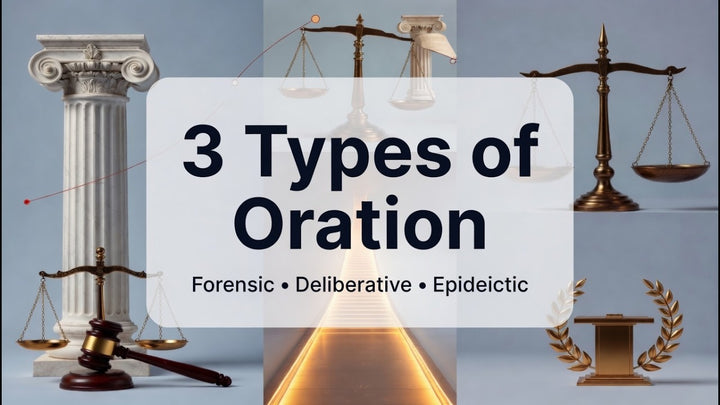
The same appeal can succeed with one audience and fail with another. Its effectiveness depends on who is communicating, who is listening, what each group already believes, what is at stake, and what decision the message is trying to influence. A public vote on a flood project is a textbook case of deliberative rhetoric: an argument about what a community should do next.
Why the appeals overlap
The appeals also overlap far more often than the three-box model suggests. Imagine an engineer saying, "We evaluated five possible designs and rejected our original proposal because the evidence showed it would not provide enough protection." That statement contributes to logos, because it describes a process of comparison and evaluation. It may also strengthen ethos: the willingness to abandon an earlier idea when the evidence changes makes the speaker look intellectually honest and responsible.
Or picture a graph showing that annual flood losses have risen dramatically over the past decade. The graph provides evidence relevant to logos, but it can also create urgency, concern, or fear. And a resident's personal story may appeal to pathos while also establishing her first-hand experience, which is a form of ethos. Real messages are not neatly divisible into isolated rhetorical ingredients.

How to analyze the appeals in practice
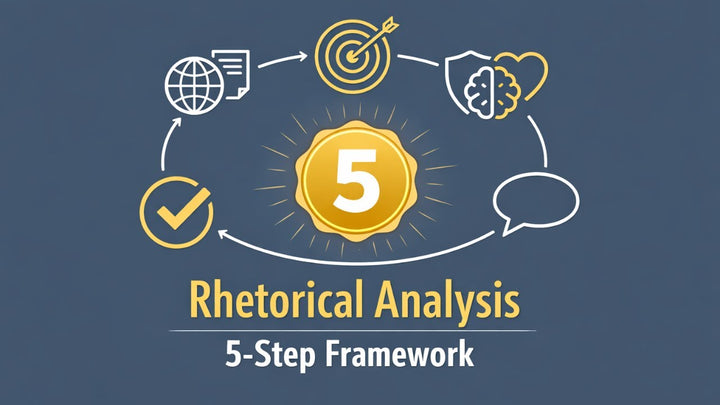
Identifying ethos, pathos, and logos is only the beginning of rhetorical analysis. To actually use the framework:
- Identify the claim. What does the communicator want the audience to believe, support, reject, or do?
- Identify the audience. Who actually needs to be persuaded for this message to succeed?
- Map the appeals. For ethos: what makes this communicator appear credible or not, and what expertise, experience, reputation, transparency, or relationship is being brought in? For pathos: which emotions, values, hopes, fears, identities, or consequences are made especially visible? For logos: what evidence is offered, and how is it connected to the conclusion?
- Evaluate the appeals. Don't merely find them. Ask whether they deserve to persuade you.
That fourth step is the one most often skipped. Some questions to ask:
- Is the speaker's credibility actually relevant to this claim? Is it earned, or is authority merely being performed?
- Is the emotional response proportionate to what has actually happened? Are some emotions encouraged while other human consequences are ignored?
- Does the evidence support the conclusion, or does it simply look impressive? What assumptions connect the evidence to the claim?
- What information has been omitted? What alternatives have not been considered?
Rhetorical literacy requires moving from recognition to judgment.
Finding all three does not make an argument good
Spotting all three appeals proves nothing about quality. A dishonest communicator can manufacture the appearance of credibility. A misleading advertisement can create extremely powerful emotion. A weak argument can contain accurate statistics. And a strong argument does not need equal amounts of ethos, pathos, and logos. There is no recipe in which every message needs one-third credibility, one-third emotion, and one-third logic.
Ethos, pathos, and logos are descriptive tools. They help us see how persuasion is being attempted. They do not automatically tell us whether the persuasion is justified.
So the next time you meet a persuasive message, move beyond asking whether you can spot the three appeals. Ask three more useful questions. Who am I being asked to trust? What am I being encouraged to care about? And what reasons actually support the conclusion?
Trust, stakes, reasons. Not three tricks, and not three boxes to check, but three ways of examining how a message gives an audience reasons to respond. The useful question is not "Which appeal is this?" It is "How is this message trying to make its conclusion worth accepting?"
To keep going, browse all articles, explore structured lessons on the Courses page, or see the illustrated guides on the Guides page.
Foundations Series · Volume 1
An Introduction to Rhetoric
A visual guide to persuasion, argument, and influence. See how messages work.
A clear, visual introduction to the choices inside a message: credibility, emotion, reasoning, and timing, and how to tell them apart in something you have already read or watched.
Sources and further reading
- Aristotle, Rhetoric, Book 1, Chapter 2, on the definition of rhetoric and the three proofs (Perseus Digital Library, trans. J. H. Freese)
- Aristotle, Rhetoric, Book 2, Chapter 1, on good sense, virtue, and goodwill (Perseus Digital Library, trans. J. H. Freese)
- Reclaiming Rhetoric, The Rhetorical Appeals: Ethos, Pathos, and Logos
- Reclaiming Rhetoric, How to Do a Rhetorical Analysis
- Reclaiming Rhetoric, The Toulmin Model Explained
Frequently Asked Questions
What do ethos, pathos, and logos mean?
Ethos is the credibility and character a communicator presents; pathos is the emotional frame of mind the audience is put into; logos is the reasoning that connects evidence to a conclusion. Put simply: trust, stakes, and reasons.
Where do ethos, pathos, and logos come from?
From Aristotle's Rhetoric, Book 1, Chapter 2, which describes three kinds of proof furnished by the speech: the speaker's moral character, the hearer's frame of mind, and the speech itself as it proves or seems to prove.
Is ethos the same as credentials?
No. Credentials can contribute, but ethos is interpreted by an audience and includes fairness, transparency, judgment, and goodwill. Aristotle named good sense, virtue, and goodwill as its core qualities.
Is using pathos manipulative?
Not automatically. Fear, anger, or compassion can be appropriate responses to real situations. Pathos becomes manipulative when it distorts the stakes, invents threats, or distracts from contrary evidence.
Does a statistic count as logos?
Only partly. Logos is the reasoning that connects evidence to a claim. An accurate statistic can still fail to support the conclusion it is attached to.
Can one sentence use more than one appeal?
Yes. An engineer who explains rejecting her own first design offers reasoning (logos) and also builds trust (ethos). The appeals overlap constantly.
Does a good argument need all three appeals in equal amounts?
No. There is no formula. The right mix depends on the audience, the situation, and the decision at stake, and the appeals should be evaluated, not just identified.
Reclaiming Rhetoric is independent and reader-supported.
If this helped, you can help keep it free.